
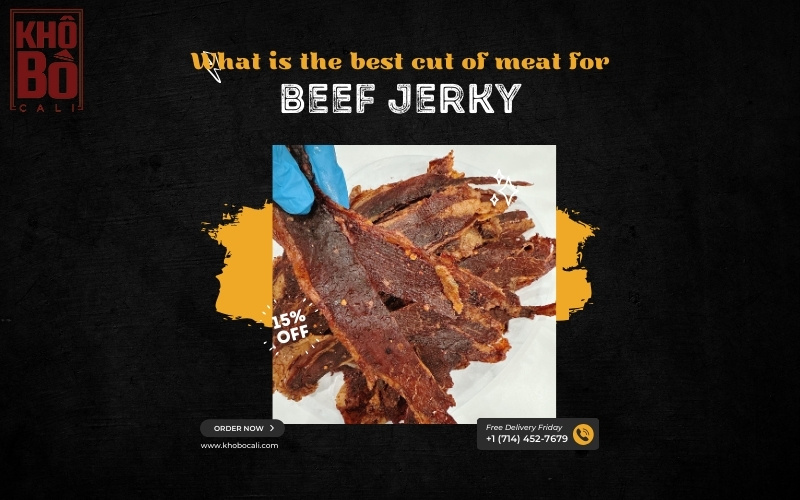
Making beef jerky at home is not only a fun project but also a great way to create clean, protein-packed snacks for you and your family. It can even turn into thoughtful homemade gifts for friends, especially when experimenting with unique options like venison or moose meat. But before you dive in, you might be wondering: what is the best cut of meat for beef jerky? With so many choices at the butcher counter, it can feel overwhelming. That’s where Khô bò CALI step into guide you toward the perfect cut and help you craft jerky that’s both delicious and high quality right from your own kitchen.
What is the best cut of meat for beef jerky
When it comes to making beef jerky, the single most important factor to remember is this: always choose lean cuts of beef. Fat may taste wonderful in a steak, but when it comes to jerky, it’s a problem. Fat doesn’t dehydrate properly, which means it can leave your jerky greasy, chewy in all the wrong ways, or worse cause it to spoil quickly with an unpleasant rancid flavor. So, while rib-eye steaks with their rich marbling, tender filet mignon, or a juicy tri-tip roast might tempt you at the butcher counter, those cuts are far better suited for grilling, smoking, or braising.

For jerky, your focus should shift toward the leanest cuts available. Popular choices include top round, bottom round, eye of round, and sirloin tip, all of which strike the perfect balance between flavor and texture without carrying excess fat. These cuts are affordable, easy to slice thinly, and dehydrate into a firm but flavorful jerky. Another excellent option is flank steak, which, although slightly pricier, delivers a bold beef flavor and great chew when prepared correctly.
One of the reasons many jerky enthusiasts love experimenting with wild game such as venison, elk, or moose is because these meats are naturally leaner than commercially raised beef. Not only does that make them ideal for jerky, but they also bring unique flavors that elevate the final product far beyond traditional beef jerky. Whether you’re sticking with beef or branching out into wild game, the golden rule remains the same: lean cuts will always give you the best jerky.
Criteria for Choosing a Cut of Meat for Beef Jerky
When selecting the right cut of beef for jerky, one rule stands above the rest: look for lean meat. Fat may enhance the taste of a steak, but when it comes to jerky, fat becomes your enemy. It doesn’t dehydrate properly, can cause uneven drying, and often leads to a greasy texture or unpleasant rancid flavors over time. That’s why cuts with heavy marbling like brisket may not be the best choice, despite their appealing grain. Instead, opt for leaner alternatives such as flank steak, skirt steak, top round, or eye of round, which all provide excellent texture and flavor once dried.
Another important tip is to build a relationship with your local butcher. Most butchers are more than familiar with jerky making and often enjoy it themselves. They’ll know exactly which cuts are the leanest and freshest, and they can guide you toward options that may not even be on display in the case. Don’t be afraid to ask they’ll likely be happy to share recommendations and tricks to help you make the best jerky possible.

In fact, many butchers will even go the extra mile by trimming away excess fat and slicing the meat for you using a commercial-grade meat slicer. This not only saves you time and effort but also ensures that your slices are uniform in thickness. Consistent slices are essential for jerky making because they dry evenly, preventing a situation where some pieces are over-dried while others remain too moist.
Of course, if you prefer a hands-on approach, you can slice the meat yourself at home with a sharp knife. Just remember that this method requires patience, precision, and a steady hand. Freezing the beef slightly beforehand can make it easier to cut uniform slices. Whether you do it yourself or rely on a butcher’s expertise, keeping the focus on lean cuts and consistent slicing will set you up for jerky-making success.
Tips for Buying Meat for Beef Jerky
When it comes to selecting the best meat for homemade jerky, it helps to start by looking at what professional jerky makers often use. Their choices provide a reliable foundation and can guide you toward cuts that deliver the right balance of leanness, flavor, and texture for your own recipes. Below are some of the most popular and effective options, each with its own unique advantages.
Top Round

One of the most common cuts used in commercial jerky production is top round. Taken from the upper section of the hind legs (also known as inside round or London Broil), this cut is prized for being both lean and affordable. It has a very distinct grain that makes it easy to slice into jerky strips, though if cooked as a steak it would require slow, low-temperature cooking to prevent toughness. For jerky, however, that grain becomes a strength, creating firm yet satisfying bites.
Eye of Round

Another excellent option is eye of round, which comes from the same section of the animal as the top round. It’s shaped in a way that makes slicing for jerky almost effortless. Eye of round has very little fat and pronounced muscle fibers, which help it dehydrate consistently. While it may not carry quite as much natural flavor as top round, it is leaner than bottom round and works wonderfully with bold marinades. In fact, eye of round is often the go-to for anyone who likes to load their jerky with seasoning, spices, and smoky flavors.
Bottom Round

Bottom round, the lower portion of the round, is another popular cut. Like top and eye of round, it’s lean and has a strong grain, though it typically contains slightly more fat. That said, bottom round is very budget-friendly and works particularly well when paired with a flavorful marinade. It’s a versatile choice for home jerky makers, offering a nice balance between texture and cost.
Flank Steak

For those who want extra beefy flavor, flank steak is worth considering. Known for its toughness and heavy grain, flank is more commonly seen in dishes like carne asada or fajitas, where thin slicing is essential. For jerky, flank steak produces a chewier texture that many people enjoy. However, it does contain more marbling, which means it can become overly hard if dried too long. Use this cut when you want robust flavor and don’t mind a bit of chew in your final product.
Sirloin

Sirloin is another strong candidate for jerky making. While it contains more marbling than round cuts, careful trimming solves that issue, leaving behind a cut packed with rich, beefy taste. Sirloin tip, in particular, is slightly pricier than round cuts but still affordable, making it a favorite among home jerky enthusiasts who want to maximize flavor. The payoff for the extra trimming is a jerky that is bold, savory, and satisfying.
Ground Meat

For something different, jerky can also be made from ground meat. This method produces incredibly tender jerky and allows for endless flexibility in seasoning. Our Bearded Butcher Beef Bites, for example, are made entirely from ground beef. The key here is choosing the leanest ground meat you can find ideally 96% to 98% lean. If you can’t find it at the store, grinding your own is the best solution, and it’s also a fantastic way to make use of venison trimmings or other leftover cuts. Ground meat jerky may not have the same traditional chew, but it creates a soft, snackable texture that many people love.
Final Tip

Whichever cut you choose, always remember that lean meat is essential, and consistency in slicing will make all the difference in how your jerky turns out. From top round to sirloin tip or even ground beef each cut brings something unique to the table. It all comes down to balancing your budget, the flavors you want to highlight, and the texture you enjoy most.
Cuts to Avoid and Why
Not every cut of beef is suitable for making jerky. While many types of meat can technically be dehydrated, certain cuts simply don’t lend themselves well to the process. They may contain too much fat, be difficult to slice consistently, or just be better appreciated when prepared in other ways. Below are a few examples of cuts we recommend avoiding when preparing jerky at home, along with the reasons why.
Brisket

Although some people experiment with brisket for jerky, it’s generally not a great choice. Brisket is a fatty cut of beef, and as we’ve mentioned before, fat is the enemy of good jerky. The high fat content prevents the meat from drying out properly, meaning your jerky won’t be shelf-stable. Instead, it will need to be refrigerated and consumed quickly defeating the purpose of jerky as a convenient, portable snack that can last weeks or even months. Beyond that, brisket is an incredible cut when smoked whole or braised low and slow, so most enthusiasts (ourselves included) prefer saving brisket for barbecue rather than trimming away all the fat just to make a batch of jerky.
Tenderloin

At the other end of the spectrum, tenderloin is another cut that isn’t well-suited for jerky making. Tenderloin is one of the most prized cuts of beef, home to famous steaks such as filet mignon and porterhouse. It’s known for its tenderness and fine marbling, qualities that make it perfect for searing, roasting, or grilling but not for jerky. The marbling in tenderloin once again creates issues with dehydration, and frankly, this luxurious cut is far better enjoyed fresh. Using tenderloin for jerky is not only expensive, but also a bit of a waste when there are leaner, cheaper cuts that produce far better results.
Rib Cuts

Cuts from the rib section including prime rib, cross rib, and beef ribs are also poor candidates for jerky. These cuts are richly marbled and have a fine grain that makes them difficult to slice thinly. While they excel when cooked low and slow, producing juicy, melt-in-your-mouth roasts and steaks, they fall short in jerky making. The excess fat makes them spoil more quickly, and their best qualities rich flavor and tenderness are better highlighted in other cooking methods. Simply put, rib cuts are far too valuable and delicious when prepared properly to be turned into jerky.
Final Thought

While it might be tempting to experiment with every cut of beef, remember that jerky is about practicality: lean meat that dries evenly, keeps well, and develops a satisfying chew. Cuts like brisket, tenderloin, and ribs shine in the smoker, grill, or oven, but when it comes to jerky, you’ll get better results from more affordable, leaner options like rounds, sirloin tip, or flank steak. Save the premium cuts for a hearty meal and let the lean cuts do the work of becoming your perfect jerky snack.
FAQs About the Best Meat for Making Jerky
Why is lean meat important for beef jerky?

Lean meat is essential because fat simply doesn’t dry out the way muscle tissue does. When fat remains in the meat, it traps moisture, which not only gives the jerky a greasy texture but also dramatically reduces its shelf life. Fat can become rancid quickly, which means your jerky won’t store well or taste as good over time. By choosing lean cuts, you ensure that the jerky dehydrates properly, giving you a longer-lasting, safer, and better-tasting snack.
Can I make jerky from expensive cuts of beef?

Technically, yes you can make jerky from premium cuts like flank steak or even tenderloin. Flank steak, in particular, produces delicious jerky with bold flavor, though it often comes with a higher price tag. That said, the beauty of jerky is that you don’t need to spend a fortune to get amazing results. More affordable cuts such as top round, bottom round, or eye of round are lean, easy to slice, and widely available. These cuts are actually preferred by many jerky makers because they strike the best balance between cost, flavor, and texture.
Can wild game be used for jerky?

Absolutely. In fact, wild game like venison, elk, or moose often makes some of the most flavorful jerky you’ll ever taste. Wild game tends to be much leaner than commercially raised beef, making it naturally suited for dehydration. Beyond that, it brings a distinctive flavor profile that can’t be replicated with beef alone. Whether you hunt your own or source it from specialty butchers, wild game jerky is a fantastic way to create a unique, protein-rich snack.
Do I need special equipment, like a jerky gun, to make ground beef jerky?

A jerky gun isn’t strictly necessary, but it does make the process quicker, cleaner, and more enjoyable. With a jerky gun, you can easily shape uniform strips from ground meat, which ensures even drying and a professional look. If you don’t have one, you can still make ground beef jerky by shaping the strips by hand, though it can be more time-consuming and a bit messier. Either method works the jerky gun simply adds convenience.
How can I make chewier or more tender beef jerky?

The chewiness of jerky depends largely on how you slice the meat. If you slice with the grain of the muscle fibers, the jerky will be tougher and chewier perfect for those who like a more traditional, hearty bite. On the other hand, slicing against the grain shortens the fibers, resulting in jerky that’s more tender and easier to chew. By experimenting with slicing techniques, you can customize the texture of your jerky to match your personal preference.
At the end of the day, choosing the right cut of beef is the foundation of great jerky. The most important rule is simple: lean meat with a clear, visible grain will always deliver the best results. Cuts like top round, eye of round, and sirloin tip are not only ideal for jerky making but are also some of the most budget-friendly options at the butcher counter. If you’re ever unsure, don’t hesitate to ask your local butcher for advice they know exactly what is the best cut of meat for beef jerky and can guide you toward the right choice.
Making jerky at home is about more than just the meat it’s also about creativity. You get to decide which cut to use, how to season it, and what marinades bring out the flavors you love most. Once you understand the basics of selecting lean beef and preparing it properly, the process becomes straightforward and rewarding. From experimenting with different cuts to trying bold new spice blends, each batch of homemade jerky becomes a chance to create something uniquely your own. With the right cut of beef and a little patience, you’ll be well on your way to enjoying flavorful, protein-packed jerky whenever you want.
Readmore:
How do you store beef jerky? Here are 5 suggested ways to preserve beef jerky for longer use
Does Beef Jerky Expire? Everything You Need to Know Before Eating It