
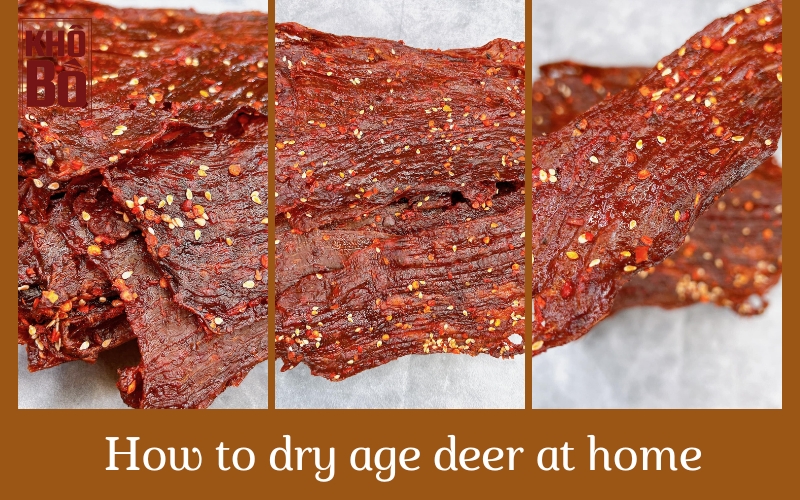
Deer jerky is a beloved delicacy in many mountainous regions of Vietnam, known for its rich flavor, tender chew, and perfectly seasoned taste. However, with the market flooded by low-quality imitations made from beef or pork, it’s increasingly difficult to find authentic deer meat unless you know exactly what to look for.
Rather than risking your health and taste buds on store-bought versions, why not take matters into your own hands? Learning how to dry age deer at home not only ensures premium flavor and texture, but also gives you full control over hygiene and ingredient quality. In the guide below, we’ll walk you through the step-by-step process to create your own delicious, high-quality deer jerky at home.
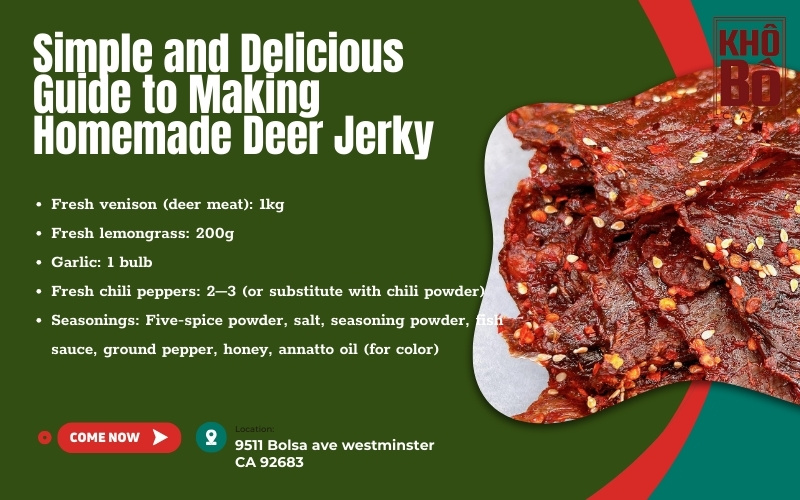
Simple and Delicious Guide to Making Homemade Deer Jerky
If you’ve ever tasted authentic deer jerky, you know just how addictive it can be—chewy, flavorful, and packed with that wild, smoky aroma. Instead of relying on store-bought options with questionable ingredients, why not try making it yourself right at home? Not only does this method give you full control over hygiene and seasoning, but it also allows you to experiment with flavors while ensuring the best quality. Plus, learning how to dry age deer at home gives your jerky a richer, deeper taste that store-bought versions simply can’t match.
-
Fresh venison (deer meat): 1kg
-
Fresh lemongrass: 200g
-
Garlic: 1 bulb
-
Fresh chili peppers: 2–3 (or substitute with chili powder)
-
Seasonings: Five-spice powder, salt, seasoning powder, fish sauce, ground pepper, honey, annatto oil (for color)
Step 1: Preparing the Meat and Ingredients
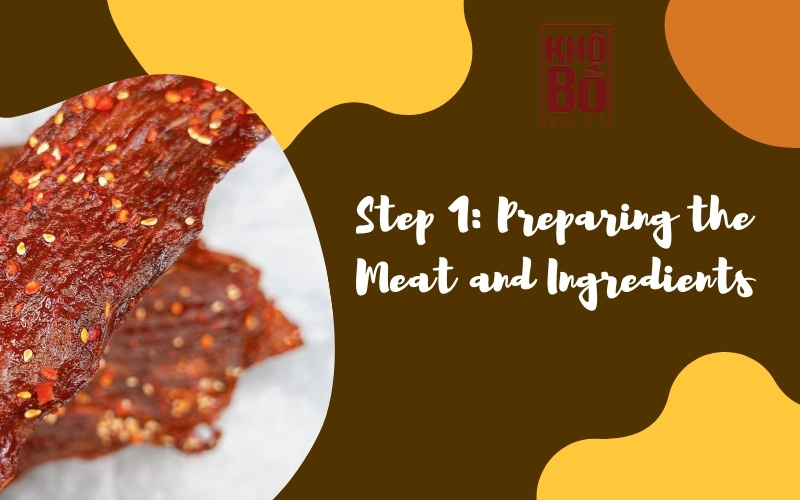
Venison has a stronger, gamey odor than pork or beef, so proper cleaning is essential. Begin by rinsing the meat with diluted saltwater. To eliminate the odor, rub the meat thoroughly with white wine or fresh ginger for a few minutes. Then, rinse again with clean water and pat dry completely.
Slice the venison into long strips approximately 15–20 cm in length and about 1–1.5 cm thick. Avoid cutting too thin, as the meat may become too dry and tough after dehydrating. Likewise, if the pieces are too thick, they may not dry evenly.
Clean the lemongrass and garlic, then finely chop or grind them. If you’re using fresh chili, mince it finely. To save time, feel free to use a food processor to blend all aromatics together into a fine paste.
Step 2: Marinating the Meat
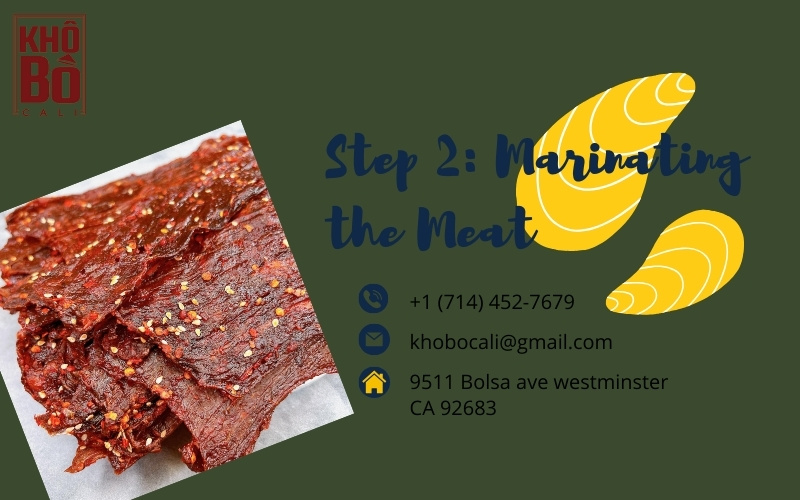
Place the sliced venison in a large mixing bowl and add the following: the chopped lemongrass, garlic, and chili, 1 tsp five-spice powder, 1 tbsp high-quality fish sauce, 1 tsp seasoning powder, 1 tsp sugar, 1 tsp salt, 1 tsp ground pepper, and 1 tbsp honey to enhance the glossy finish. Add a small amount of annatto oil to give the meat a rich, appetizing color.
Use your hands to massage the marinade evenly into the meat. Cover and refrigerate for at least 4 hours—ideally overnight—to allow the flavors to fully penetrate.
Step 3: Sun-Drying the Meat
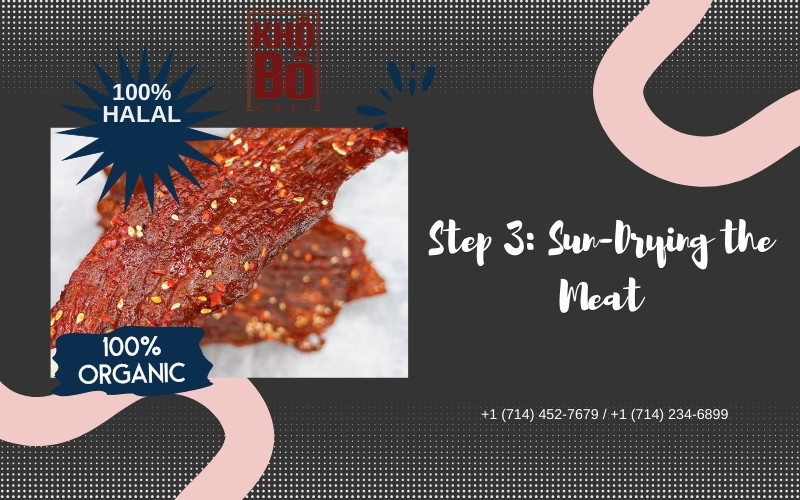
After marinating, it’s time to begin the drying process. Traditionally, the meat is sun-dried for 2–3 days to achieve the perfect texture. Lay the meat strips on a drying rack and place them in direct sunlight between 9 a.m. and 3 p.m. each day.
If you don’t have access to ample sunlight, you can use an oven or air fryer. Set the temperature to 180°C (356°F) and dry the meat for about 15 minutes, flipping it once to ensure both sides are slightly seared and firm.
Step 4: Dehydrating the Jerky
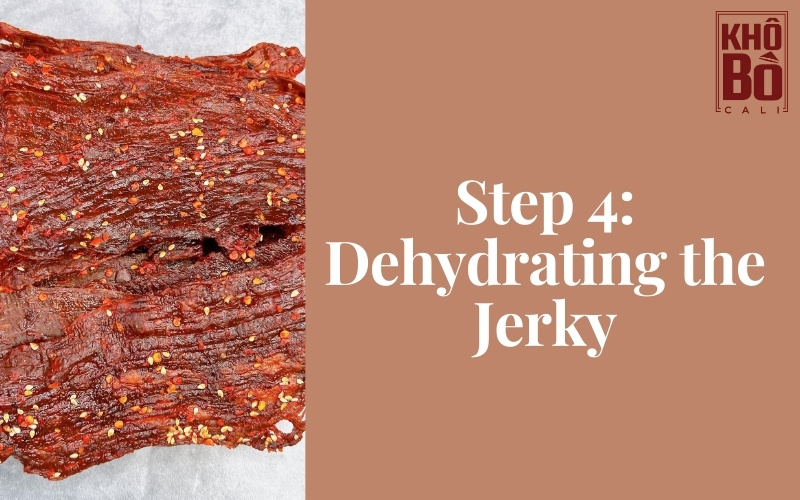
Now, it’s time to fully dehydrate the meat into jerky. You can use an oven, an air fryer, or even a non-stick pan for this step.
-
Oven/Air Fryer: Preheat to 100–120°C (212–248°F). Arrange the meat strips on a tray and dehydrate for 1.5 to 2 hours, flipping every 30 minutes for even drying.
-
Non-Stick Pan: Place the meat strips on the pan over low heat and cook for 30–40 minutes, or longer depending on the thickness. Stir frequently to avoid burning and ensure even dryness.
Once the jerky is done, let it cool completely. Lightly pound the strips to loosen the fibers, then shred them into smaller pieces for easier snacking.
Readmore: How to grill dried squid using an air fryer for a mouthwatering aroma
Important Tips for Making Delicious Deer Jerky
To achieve the perfect deer jerky that is both flavorful and tender, with a light crisp exterior and chewy, soft interior, there are several key points to keep in mind during the preparation process:
-
Choose Fresh, High-Quality Venison: The first step to making great jerky is selecting fresh, high-quality venison. It’s recommended to use meat from the thigh or loin, as these cuts are tender, low in sinew, and easy to prepare. Fresh venison should have a vibrant red color, feel slightly sticky to the touch, and have good elasticity. It should not be slimy or have any unpleasant odor.
-
Properly Slice the Meat: Slicing the meat correctly is another crucial step that greatly impacts the final texture of your jerky. Cut the meat in long strips, following the grain of the muscle fibers. This will give the jerky the ideal chewiness and allow it to shred easily into long strands when eaten. The thickness of each slice should be about 1-1.5 cm—this is the perfect thickness for jerky. If you cut the meat too thin, it will become overly dry and tough, while if it’s too thick, the spices won’t penetrate evenly, and the drying process will take longer.
-
Marinate the Meat for the Right Amount of Time: It’s essential to marinate the meat for at least 4 hours, or ideally overnight in the refrigerator, to allow the spices to fully penetrate and enhance the flavor of the venison. The longer the meat marinates, the richer the taste will be. However, avoid overusing five-spice powder, as it may overpower the natural flavor of the venison.
-
Optional Steaming for Even Cooking: In addition to sun-drying or oven-drying the meat, you can also briefly steam the venison before drying it. Steaming ensures that the meat cooks evenly and retains moisture inside, preventing it from being undercooked after the drying process. This step can also help keep the jerky more tender.
-
Re-dry After Storage: After storing your homemade deer jerky for 2-3 weeks, it’s a good idea to re-dry it at a low temperature. This will help prevent the jerky from becoming too moist, which can lead to mold and spoilage. By re-drying, you can ensure the jerky stays fresh and dry, maintaining its optimal texture and flavor.
How to Store Deer Jerky for Long-Term Preservation
If not stored properly, deer jerky can become moldy or lose its delicious flavor. Below are some tips to help you store your jerky for a long period while maintaining its best quality.
Storing at Room Temperature
If you plan to consume your deer jerky within a short time, such as 1-2 weeks, you can store it at room temperature. Place the jerky in a ziplock bag or an airtight glass jar, optionally adding a desiccant packet to prevent moisture from entering, which could cause the jerky to become damp. Store it in a cool, dry place, away from direct sunlight. If you notice the jerky becoming soft due to excess moisture, you can re-dry it by placing it in an oven at 100°C for 5-10 minutes before eating.
Storing in the Refrigerator
Room temperature storage is suitable for short-term use, but for longer preservation, place the jerky in the refrigerator at a temperature below 5°C. It’s important to wrap the jerky in newspaper or moisture-absorbing paper, then store it in a ziplock bag or airtight container. When you’re ready to eat, you can briefly grill or steam the jerky to make it softer and enhance its aroma.
Storing in the Freezer
For long-term storage, freezing deer jerky is an excellent option, as it can last from 6 months to a year without losing quality or becoming too dry. Before placing the jerky in the freezer, vacuum-seal it. If you don’t have a vacuum sealer, you can tightly wrap the jerky in plastic wrap and then place it in a ziplock bag or a plastic container.
When you’re ready to enjoy the jerky, allow it to thaw naturally at room temperature for 15-30 minutes before reheating.
If you notice any signs of mold, unusual odors, or slime forming on the jerky, it’s best to discard it to ensure food safety.
Conclusion
Homemade deer jerky not only ensures cleanliness and high quality, but also remains free from preservatives. By following the detailed recipe and steps outlined in this article, you can easily prepare a delicious and flavorful jerky that’s even better than what you’ll find in stores. We wish you success in creating this mouth-watering treat!
If you’re looking to purchase more delicious snacks, please feel free to contact us.
KHÔ BÒ CALI
Address: 9511 Bolsa ave westminster CA 92683
Phone numbers: +1 (714) 452-7679 / +1 (714) 234-6899
Email: [email protected]
Website: https://khobocali.com/